The Daily Star reports that Sadhana Nanda Mohasthabir — the venerated Bangladeshi Buddhist monk better known as "Bana Bhante" — died recently in hospital care in his hometown of Rajban Bihar in Rangamati. Arun at the "Angry Asian Buddhist" blog does an excellent job of putting Bana Bhante and his importance into historical perspective (and offers links to his teachings online) — we recommend checking that out, here.
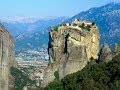
--------------------------------click on the "show more" button---------------------------- Part name: "Amazing places from around the world" Thank you for watching this video, You can subscribe to this channel by pushing the "subscribe" button above the video, The story behind the photos: Photo number 10: The Hanging Temple is a temple built into a cliff (75 m or 246 ft above the ground) near Mount Heng, China. Built more than 1500 years ago, this temple is notable not only for its location on a sheer precipice but also because it includes Buddhist, Taoist, and Confucian elements. The structure is kept in place with wooden crossbeams fitted into holes chiseled into the cliffs. Photo number 9: Saint Basil's Cathedral, is a Russian Orthodox church erected on the Red Square in Moscow in 1555--61. Built on the order of Ivan the Terrible to commemorate the capture of Kazan and Astrakhan, it marks the geometric center of the city and the hub of its growth since the 14th century. It was the tallest building in Moscow until the completion of the Ivan the Great Bell Tower in 1600. Photo number 8: The Tiger's Nest is a prominent Himalayan Buddhist sacred site and temple complex, located in the cliff side of the upper Paro valley, Bhutan. A temple complex was first built in 1692, around the Taktsang Senge Samdup cave where Guru Padmasambhava is said to have meditated for three months in the 8th century. Padmasambhava is credited with introducing Buddhism to Bhutan and is the ...Video Rating: 4 / 5
Photo: Florence Delahaye Sister Chan Khong is best known as Thich Nhat Hanh's closest collaborator, but she's also a dedicated activist and gifted teacher in her own right. Andrea Miller profiled her in the May 2012 Shambhala Sun magazine, and the entire piece is now online here . "People think that engaged Buddhism is only social work, only stopping the war," Chan Khong says. "But, in fact, at the same time you stop the war outside, you have to stop the war inside yourself." Over her lifetime, Sister Chan Khong has learned the importance of not making peace, but rather being peace, being understanding, being love—and to embody this way of being twenty four hours a day. The key, she tells the Shambhala Sun, is to practice mindfulness. "When your body and mind are not one, you do not see deeply," she says. Read the rest of "Path of Peace: The Life and Teachings of Sister Chan Khong" here . And browse our entire May 2012 issue o...
Homepage » News » His Holiness the Dalai Lama Concludes Teachings to Taiwanese Devotees » October 5th 2012 Dharamsala, India, 4 October 2012 (Samuel Ivor, The Tibet Post International) - Concluding His teachings on Atisha's "Lamp for the Path to Enlightenment" given at the request Taiwanese disciples, His Holiness the Dalai Lama of Tibet culminated the fourth day (October 4th 2012) with a series of vows, blessings and future guidance to the gathering of devotees. The Lamp for the Path to Enlightenment, by Atisha Dipam karashrijnana (982-1054), was further examined and translated by one of the greatest spiritual leaders of our time. Drawing upon the central and final verses of the text, His Holiness cross-examined and explained key points during the teaching, which was held in the main temple in Dharamshala, India. During the teaching, the Dalai Lama re-iterated that the cultivation of Bodhisattva (enlightened existence) should be done gradually, over ti...
July 21, 10 AM-4:45 PM Vegetarian buffet lunch included. Special meditation practices in Tibetan Buddhist are associated with the bardo, the period between death and rebirth. Nyingma masters instruct us not to wait until this difficult time, but instead to see change—death and rebirth —in every newmoment. This workshop presents practices designed to heighten our ability to make positive choices at crucial times in our lives. Lecture and discussion will include practical suggestions from the Tibetan tradition on how to maintain optimal conditions during the days that proceed and follow the time of death. Cost: $ 80 Instructor: Sylvia Gretchen Suitable for all levels of students. Sylvia Gretchen , Co-Dean of the Nyingma Institute, has studied and worked with Tibetan Lama Tarthang Tulku since 1969. Served as Co-Dean of the Nyingma Institute since 1996. Worked extensively with Tibetan sacred art and literature under the direction of Tarthang Tulku. Member of the...



Comments
Post a Comment