What is Enlightenment?

Article by Anmol Mehta
Enlightenment is essentially realizing the non-dual nature of reality and for those who understand Hindu philosophy, non-duality is Creation (Param Brahman). From there, emerges multiplicity as Creation pours out into Existence (Bhuh, Bhuvah & Swaha). But, in my view, to really grasp deeply what is meant by non-duality and enlightenment, philosophical discussion or debate is not the best approach. I think it is better understood from the point of view of experience, and I will delve into my own personal experiences with non-duality to help clarify this most profound of concepts and phenomenon.
Hinduism (Advaita Vedanta) & Non-Duality:
Non-duality is best understood in Hinduism and Advaita Vedanta by the phrase Tat Tvam Asi, or Thou Art That. The true nature of reality is that all is just you. Everything is you. It is actually how it is.
The apparent sense of separation of "me" and "you" is actually false. There is no you. There is only me, or as put forth by Advaita Vedanta, there is only "I AM". The "I" referred to here though is not the ego, but the True Self. Everything is a part of this big "I", and when awareness shifts from the egocentric "i" to the real "I", you actually see that all is just you. Then there is no duality of any kind.
Buddhism (Zen) & Non-Duality:
Buddhism looks at non-duality also as the absence of the sense of a separate ego. Simply because that is the Truth, it is not Hindu or Buddhist, it is simply the Truth. Instead of asserting that "You Are All", Zen simply stops at the negation of the false sense of separation. This sometimes helps prevent the confusion of the small "i" versus big "I" concepts in Advaita and Hinduism.
In both cases, a shift of awareness is what creates an encounter with the non-dual nature of Reality. Such a shift of awareness can produce an experience such that one encounters the emptiness or absence of the sense of separate existence. There are states where the organism continues to function, with ea! ch sense organ working perfectly, but there is no center or "i" to be found.
So in my view, Hinduism and Buddhism only differ in the nature of the non-dual experience. If you are experiencing the natural working of the organism, without any sense of separation, you are enjoying a Buddhist enlightenment experience, while if you feeling the expanded sense of the Oneness with everything, you are experiencing enlightenment from the Hindu perspective. Of course I may be over simplifying it a bit, but I think you get the idea.
At the end, it does not matter what you label it, and if you wish to argue it differently you may. The point is that the roots of non-duality lie in the absence of the sense of separation and to help you understand it all even better, let's expand this idea of no-self even further.
Understanding Enlightenment Experiences of Non-Duality:
You will notice the common ground of non-duality, is the fact of no-self. But, above you will notice one other common denominator between the Hindu and Buddhist versions of this experience, which is that both result from a shift of awareness. From here we can formulate the following definition of enlightenment experience (non-dual experience) which I think is very valuable.
A shift of awareness outside of the ego-centric mind, produces an enlightenment experience.
Predominately, we live consumed by our little lives and little self. All the time dwelling on our personal drama and struggling for a little more pleasure and security. Those who are lucky, get a chance to experience cracks in this shell of the ego, and when that happens they get a glimpse of what lies beyond the self-obsessed mind. That experience of Reality, absent of ego-centric thought, is an enlightenment experience.
Such experiences are wide and varied and the nature of these experiences can form the basis of great philosophies and religions. Here I want to point out that the experiences do not have to always be mind-blowing to be significant. Any glimpse ! of the n on-dual nature of Reality, is indicative of cracks in the shell of the ego and will provide the inspiration for further challenges to this apparent dualistic reality.
These non-dual (or enlightenment) experiences can range from being swept away by the enormity of the mountains, the flow of great love, the ecstasy of sexual union, to experiences with the greater sense of Self (Big Mind in Zen Meditation), Bliss, Divinity, Natural Spontaneous Living, etc. So from here I can even come to a definition of life which I am comfortable with...
Life is an opportunity to set the stage for this shift of awareness to occur.
This shift of awareness is something that happens to you. It can be understood simply as a reward for doing your spiritual practice sincerely. This is echoed by great spiritual masters throughout history.
Enlightenment, or the necessary shift in awareness, is not something you can force or create in any way. What you can do though, is help set the stage to facilitate it's occurrence. This is where meditation, yoga, self-study and spiritual living comes in. They are the tools for preparing the soil such that the flower of Truth can blossom.
About the AuthorAnmol Mehta is a Yoga Teacher & Zen Expert. Learn yoga from Free Yoga Videos and explore Nude Yoga on his extensive Meditation and Yoga site, Free Kundalini Yoga & Guided Meditation Techniques.
Evolutionary Enlightenment: A New Path to Spiritual Awakening
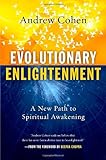 THE NEW SPIRITUALITY IS ALL ABOUT EVOLUTION
In Evolutionary Enlightenment: A New Path to Spiritual Awakening, Cohen redefines spirituality for our contemporary world--a world characterized by exponential change and an ever-expanding appreciation for the processes of evolution. Based on 25 years of groundbreaking work as a spiritual teacher and the editor-in-chief of the award-winning EnlightenNext magazine, Cohen has synthesized an original path, practice, and philosophy focused entirely on aligning yourself with what he calls "the evolutionary impulse."
His message is simple, yet profound: Life is evolution, and enlightenment is about waking up to this fundamentally creative impulse as your own deepest, most authentic self--so that you can play an active role in creating the future.
EMBRACING CHANGE AS YOUR SPIRITUAL PRACTICE
Change is a constant in today's world. Technology is accelerating, globalization is making the world more and more complex, and the pace of life seems to be speeding up every day.
While many popular forms of contemporary spirituality offer ways to feel better in the face of overwhelming change--to discover greater equanimity, detachment, or compassion--Andrew Cohen says that change is not something to be avoided, or merely tolerated, but an essential aspect of reality that needs to be consciously embraced.
Through his five fundamental tenets for living an enlightened life, Cohen empowers you to wholeheartedly participate in the process of change as your own spiritual practice. In doing so, he not only makes deep sense of life today; he shows you how to play an active role in shaping the world of tomorrow.


Comments
Post a Comment