China& 39;s first Buddhist symphony will be played at the National Theatre

Article by jekky
This work comes from the Central Conservatory of Music and Head of Tang Jianping hands. Five-movement choral work with orchestral style, length of 80 minutes, divided into Overture "Kowloon Buddha" and "Avatamsaka" "Mercy would like to Huai," "Zen Hui Feng" and "Lotus Light Building" in four movements. Work named "Shenzhou, and music", that expression of a "harmonious society begins in the mind" theme. Ye Xiaowen, China Religious Culture Communication Association, said, "Buddhist symphony" is a classical symphony with Western artistic styles, explore new oriental ancient Buddhist music, make it reflect Chinese Mahayana Buddhism, weather, sad Yan intersection of "solemn symphony." According to Tang Jianping introduction, this work's unique structure in accordance with symphonic form, style, style, but to convey the character and spirit of the Chinese Buddhist culture, temperament, is the art form of Western and Eastern civilization, the combination of wisdom. By then, the Shenzhen Symphony Orchestra, Shenzhen Dharma Sangha Temple Choir, the Central Opera House Chorus will perform the works of joint participation. Buddhist name, wooden fish, pipa and other Chinese musical instruments, chanting play musical instruments will join the ranks.This work comes from the Central Conservatory of Music and Head of Tang Jianping hands. Five-movement choral work with orchestral style, length of 80 minutes, divided into Overture "Kowloon Buddha" and "Avatamsaka" "Mercy would like to Huai," "Zen Hui Feng" and "Lotus Light Building" in four movements. Work named "Shenzhou, and music", that expression of a "harmonious society begins in the mind" theme. Ye Xiaowen, China Religious Culture Communication Association, said, "Buddhist symphony" is a classical symphony with Western artistic styles, explore new oriental ancient Buddhist music, make it reflect Chinese Mahayana Buddhism, weather, sad Yan intersection of "solemn symphony." According to Tang Jianping introduction, this work's unique structure in accordance wi! th symph onic form, style, style, but to convey the character and spirit of the Chinese Buddhist culture, temperament, is the art form of Western and Eastern civilization, the combination of wisdom. By then, the Shenzhen Symphony Orchestra, Shenzhen Dharma Sangha Temple Choir, the Central Opera House Chorus will perform the works of joint participation. Buddhist name, wooden fish, pipa and other Chinese musical instruments, chanting play musical instruments will join the ranks.
About the AuthorI am an expert from Frbiz Site, usually analyzes all kind of industries situation, such as lampworked glass beads , pandora heart bead.
Bodhi Television -Buddhist Teaching Buddha Dhamma 1
Domesticating the Dharma: Buddhist Cults and the Hwaom Synthesis in Silla Korea
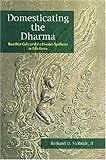 Western scholarship has hitherto described the assimilation of Buddhism in Korea in terms of the importation of Sino-Indian and Chinese intellectual schools. This has led to an overemphasis on the scholastic understanding of Buddhism and overlooked evidence of the way Buddhism was practiced "on the ground." Domesticating the Dharma provides a much-needed corrective to this view by presenting for the first time a descriptive analysis of the cultic practices that defined and shaped the way Buddhists in Silla Korea understood their religion from the sixth to tenth centuries. Critiquing the conventional two-tiered model of "elite" versus "popular" religion, Richard McBride demonstrates how the eminent monks, royalty, and hereditary aristocrats of Silla were the primary proponents of Buddhist cults and that rich and diverse practices spread to the common people because of their influence.
Drawing on Buddhist hagiography, traditional narratives, historical anecdotes, and epigraphy, McBride describes the seminal role of the worship of Buddhist deities--in particular the Buddha Úâkyamuni, the future buddha Maitreya, and the bodhisattva Avalokiteúvara--in the domestication of the religion on the Korean peninsula and the use of imagery from the Maitreya cult to create a symbiosis between the native religious observances of Silla and those being imported from the Chinese cultural sphere. He shows how in turn Buddhist imagery transformed Silla intellectually, geographically, and spatially to represent a Buddha land and sacred locations detailed in the Avata 


Comments
Post a Comment